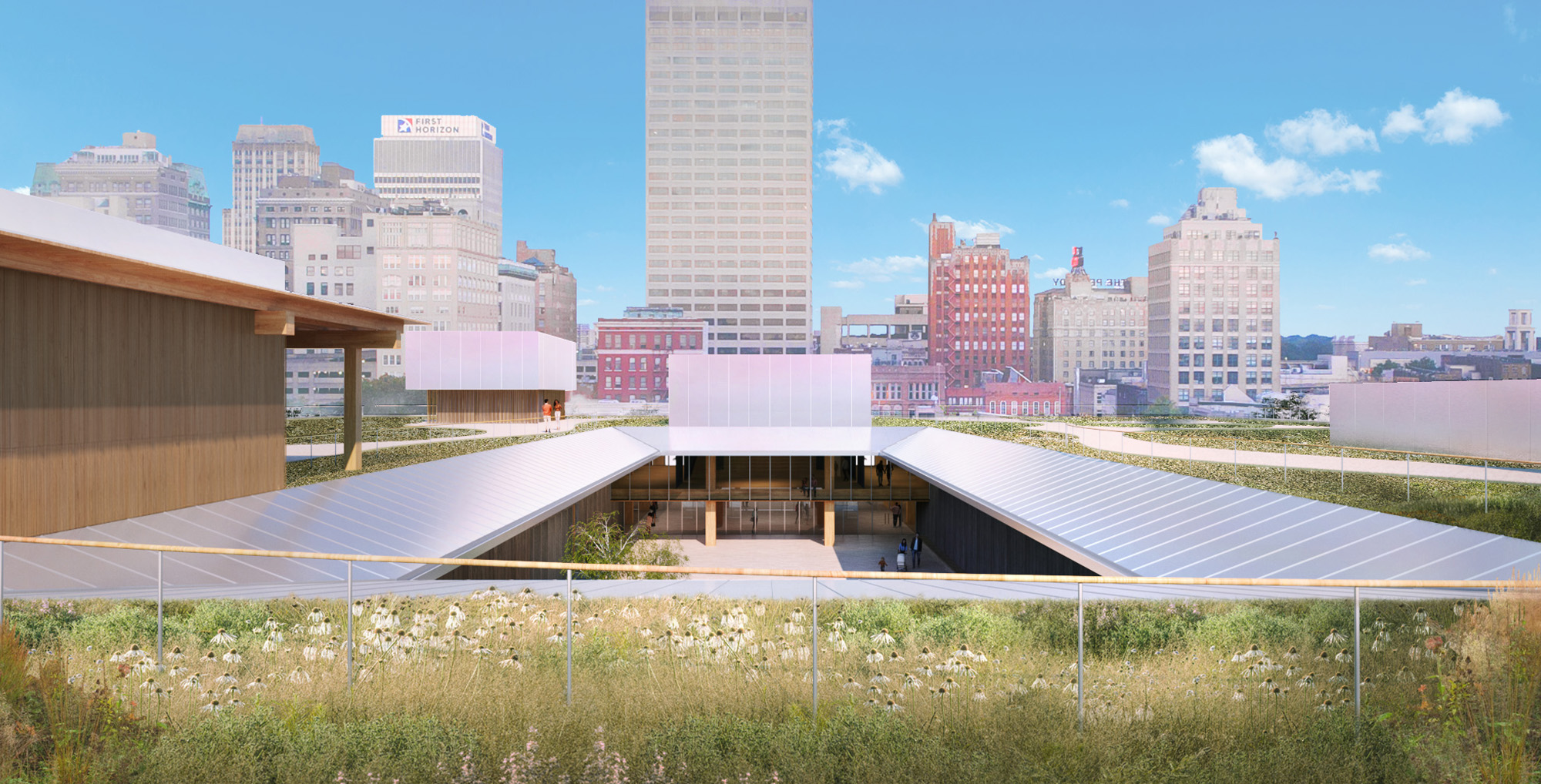

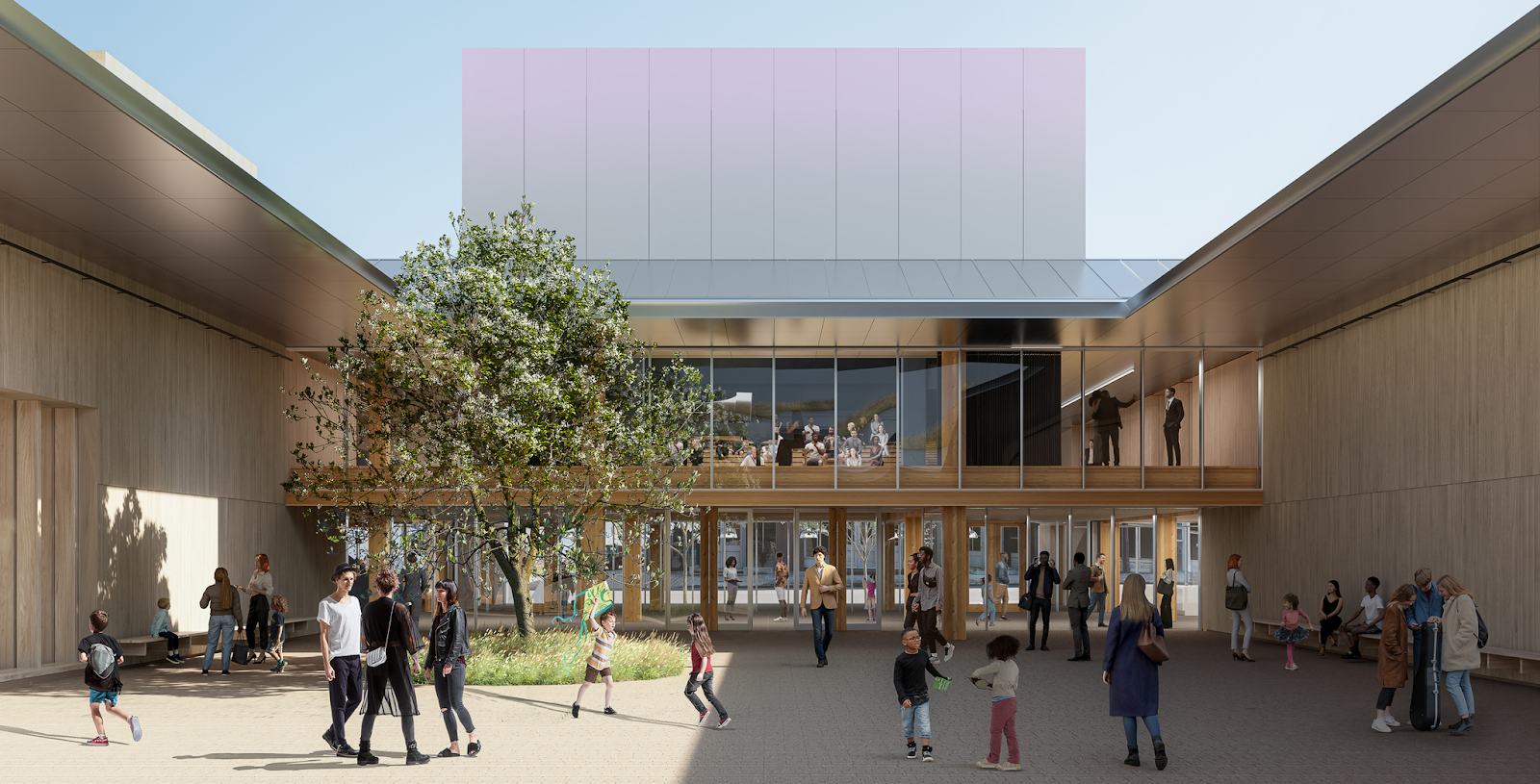
Rendering: Memphis Art Museum, Courtyard Entry, Courtesy of Herzog and de Meuron
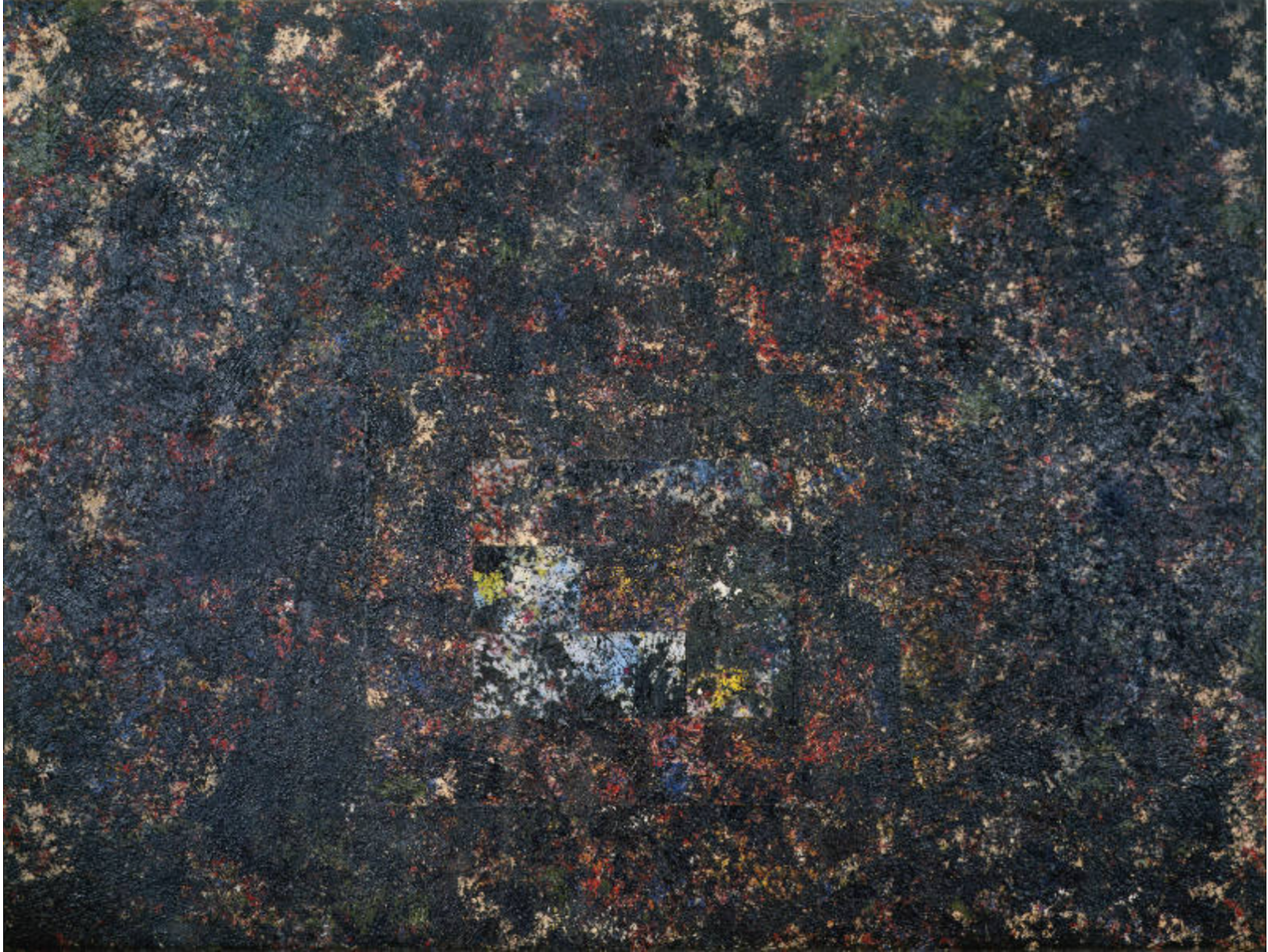
Sam Gilliam, Azure, 1977
Updated Renderings and Construction Images Available Here
MEMPHIS, Tenn. (January 21, 2026) – As it prepares to open its downtown campus in December 2026, Memphis Art Museum today shared updated renderings, construction photography, and a first look at its curatorial vision for the new Herzog & de Meuron-designed building, which remains rooted in the history, culture, and community of Memphis.
“With this building, our ambition is to be nothing less than transformational for Memphis. The city and its museum will rise as the most important and inspiring cultural destination in the Southeast–a place that draws people from near and far to experience the power of art, creativity, and community,” said Zoe Kahr, Executive Director, Memphis Art Museum.
Founded in 1916, the museum is the largest and oldest world art museum in Tennessee, Mississippi, and Arkansas, with a collection of nearly 10,000 works spanning 5,000 years of global human history. Collection strengths include Old Master paintings gifted by the Samuel H. Kress Foundation; American art of the late 19th and 20th centuries; and deep holdings in photography.
Since announcing its new home, the museum has received several transformational gifts, including 80 works by local, national, and international contemporary Black artists, which were acquired through the museum’s Blackmon Perry Initiative. Selected artists include Samford Biggers, Brittney Boyd Bullock, Jordan Casteel, Torkwase Dyson, Alteronce Gumby, Hew Locke, and Ebony Patterson. The acquisition is supported by the Blackmon Perry Endowment, which also supports a Curator of African American Art and Art of the African Diaspora, and provides funds for exhibitions, catalogues, and acquisitions.
Other growth in the collection comes from the renowned Hooks Brothers Studio archive—more than 75,000 photographs documenting Black life, excellence, and joy in the American South between 1900 and 1984–a promised gift to Memphis Art Museum from Andrea Herenton and board trustee Rodney Herenton.
“The construction of a new museum has given us a rare opportunity to not simply display more art, but to reimagine how we think about history, power, creativity and connection,” said Dr. Patricia Lee Daigle, Chief Curator of Memphis Art Museum. “We’re able to present the collection in ways that reflect the lived realities of the city that we serve.”
When the museum opens, its galleries will be organized into 18 distinct exhibitions that highlight the collection’s strengths while drawing connections across time, geography, and medium. The museum’s new architecture enables visual and conceptual dialogue between galleries, reinforcing themes that move through the museum. The museum will announce artworks that have been commissioned for its new cultural campus and the opening exhibition program in the coming months.
Liberation is one throughline that connects galleries across the courtyard. One exhibition is anchored by Henry Sharp Studio’s Warren Black Gospel Window, on view for the first time, a remarkable early depiction of Christ and three biblical women as Black. This work will be in conversation with another exhibition across the courtyard, which explores the liberatory potential of jazz for Black American abstract artists, highlighted in the museum’s beloved Azure by Sam Gilliam.
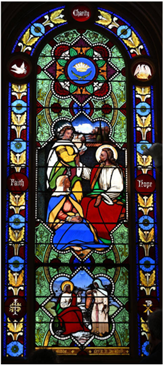
Henry Sharp Studio, Warren Black Gospel Window: Christ in Conversation with Mary, Martha, and Samaritan Woman, 1877
Designed by Pritzker Prize-winning architecture firm Herzog & de Meuron and architect of record archimania with landscape design by OLIN, the new 123,500-square-foot museum expands the institution’s existing gallery space by 50 percent and provides 600 percent more art-filled free public space, including a 10,000-square-foot community courtyard at street level and a 50,000-square-foot rooftop sculpture garden.
Ascan Mergenthaler, Senior Partner, Herzog & de Meuron, stated, “The rapid progress of the new museum's construction is apparent, and it is incredibly rewarding to see the many spaces we envisioned coming to life. The timber-beamed galleries, the welcoming entrance lobby along Front Street, the expansive courtyard with its connection to the river, and the spectacular roof terrace overlooking the Mississippi floodplain are all taking shape. Already, the civic nature of the building is tangible, and one can sense the positive impact it will have on Memphis.”
Occupying an entire city block, the new museum redefines downtown Memphis. The building’s design captures the warmth and texture of the region, with natural tones inspired by the clay banks of the Mississippi River. An open invitation to the city, its transparent glass façade, and street-level galleries will let passersby see the art inside and encourage creativity to spill out onto the sidewalks, blurring the line between the museum and Memphis itself. The building is a new connection between downtown and the riverfront, and a public plaza shared with the historic Cossitt Library will create a lively cultural commons along the bluff. At its center, a broad, shaded courtyard will serve as a civic hub and gathering space.
Encircling the courtyard in a continuous, single-story loop, the galleries will provide generous, flexible spaces for displaying the museum’s diverse art collection. Five galleries will include large windows overlooking either the Mississippi River or the community courtyard. Nearby, light-filled classrooms with ideal northern exposure will offer inspiring spaces for making and learning art at every level—from school groups to adult artists—further connecting the act of seeing art with creating it.
Atop the building is a full-roof garden—an “art park in the sky”—that will feature sculptures, native plants, an event pavilion, and sweeping views of Downtown Memphis and the Mississippi River. A view of the river is accessible at every level of the building, with a framed view of the historic waterway and an elevated overlook of the horizon.
The building is among the first major U.S. museums constructed using laminated timber. Wood elements incorporated throughout the campus serve as a defining architectural element, from the entry porch and lobby to galleries, the café, education areas, classrooms, and event areas.
The museum will open during a year of major cultural milestones across the city, including expansions at the National Civil Rights Museum and the National Ornamental Metal Museum. These new projects join an existing dense cultural sector, including three ballet companies, four theater groups, and five museums documenting Memphis’ pivotal role in the history of blues, rock, and soul.
“The depth of a community’s belief in the arts is reflected in its willingness to invest boldly in spaces that invite imagination, dialogue, and connection. Our spectacular new home embodies that belief. It brings unprecedented clarity, visibility, and ambition to everything we do, signaling a new era not only for the museum, but for Memphis itself,” said Dr. Kahr.
###
About Memphis Art Museum
Opening in December 2026 along the Mississippi River, Memphis Art Museum is the reimagined home of the Memphis Brooks Museum of Art. As a 123,500-square-foot cultural campus, it offers expanded galleries, abundant public spaces, and new studios for learning and creativity. Designed as an open invitation to the city, the museum serves as a home for creativity and community, where Memphians and visitors gather, connect, and experience the power of art. With world-class architecture, a rooftop sculpture garden, and year-round cultural programming.
Media Contacts: Kelly Helton, kelly.helton@memphisartmuseum.org | 901-590-6935Alli Steinberg, alli.steinberg@finnpartners.com | 212-583-2754
For full press release, please refer to the downloadable PDF.