March 26th - September 27th
Summer Art Garden: Wax Print Wonderland
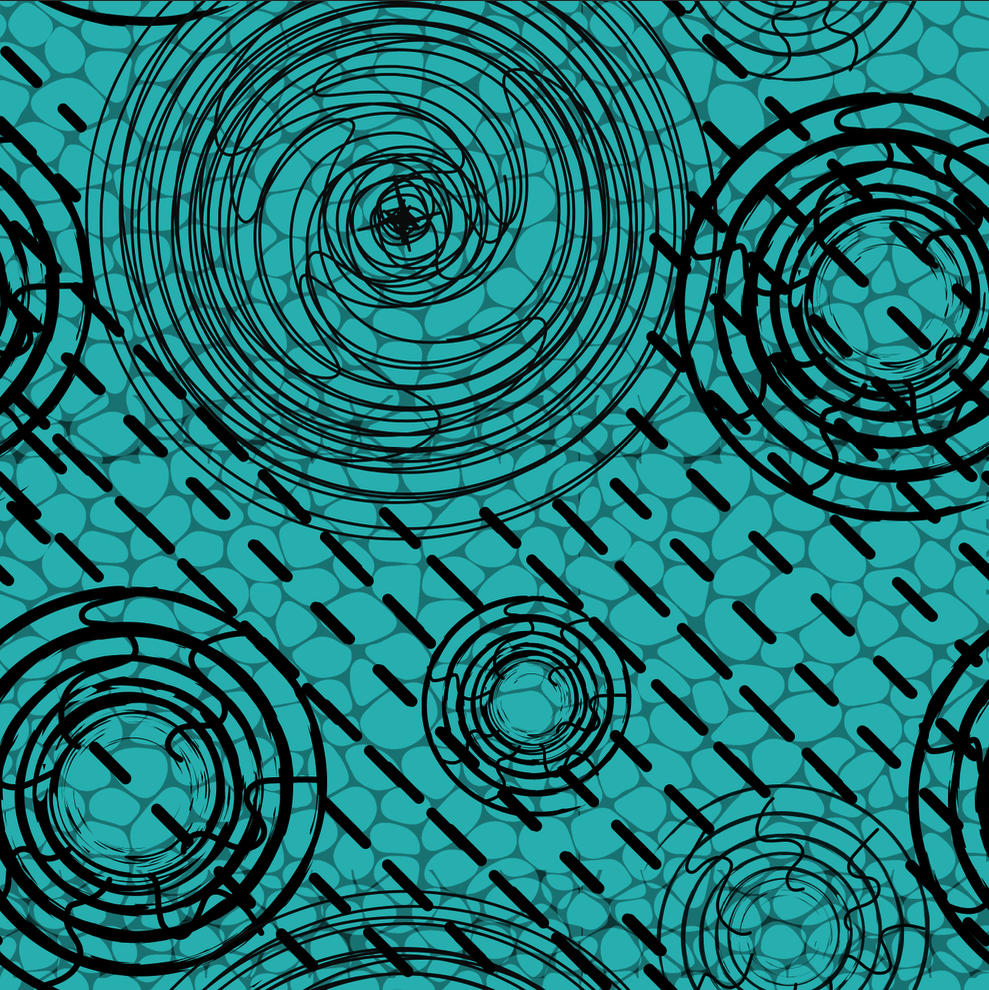
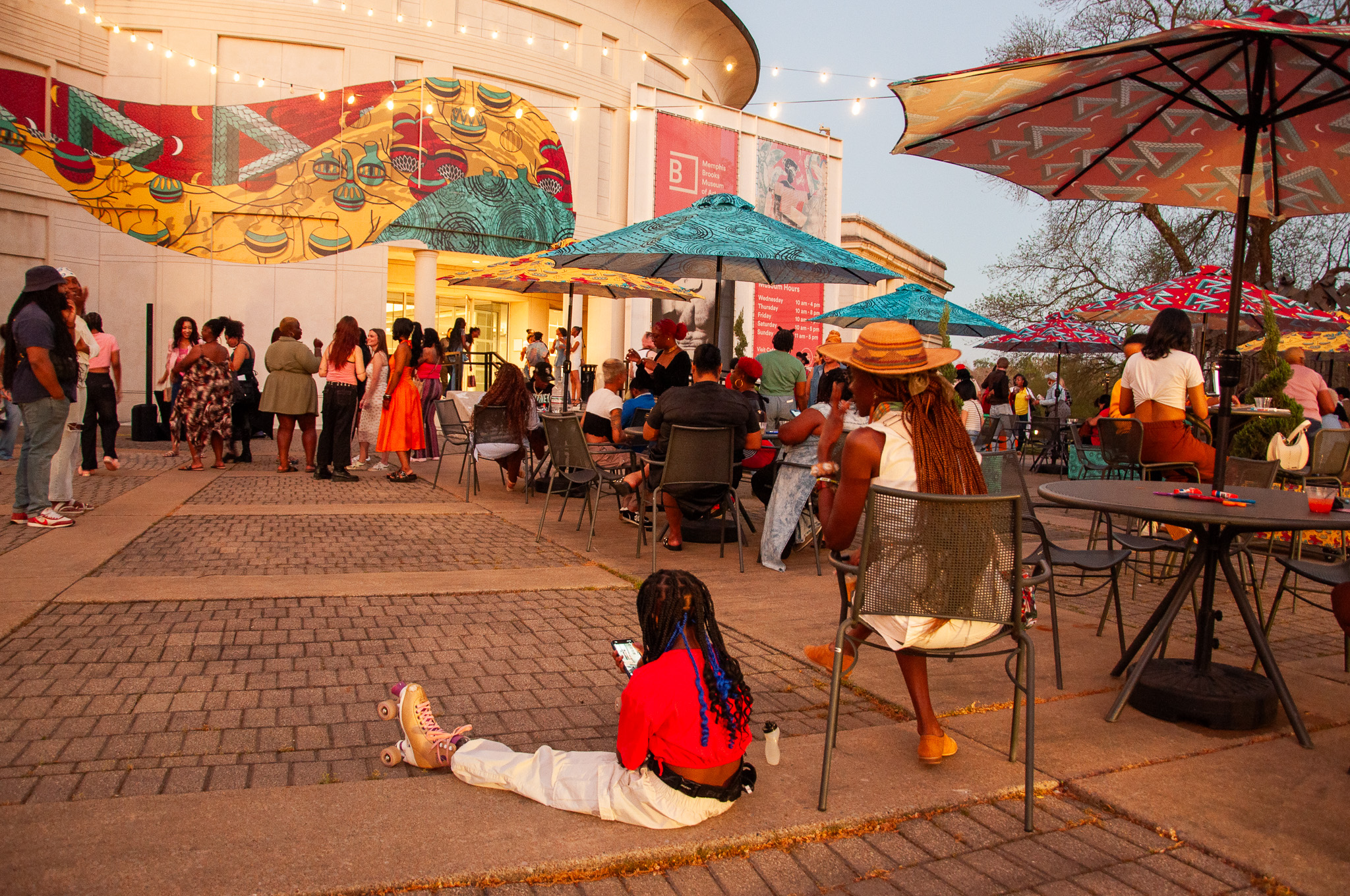
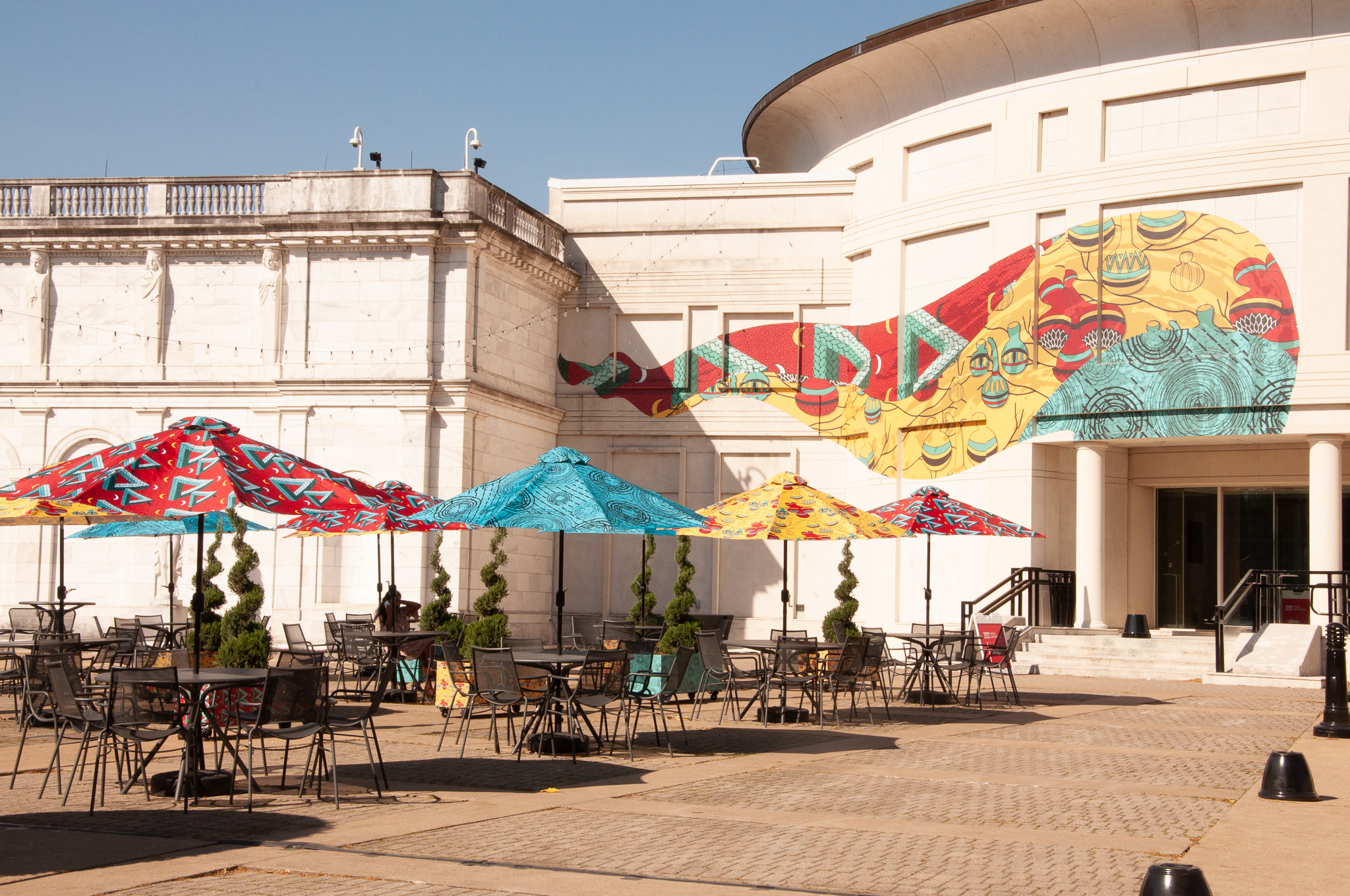
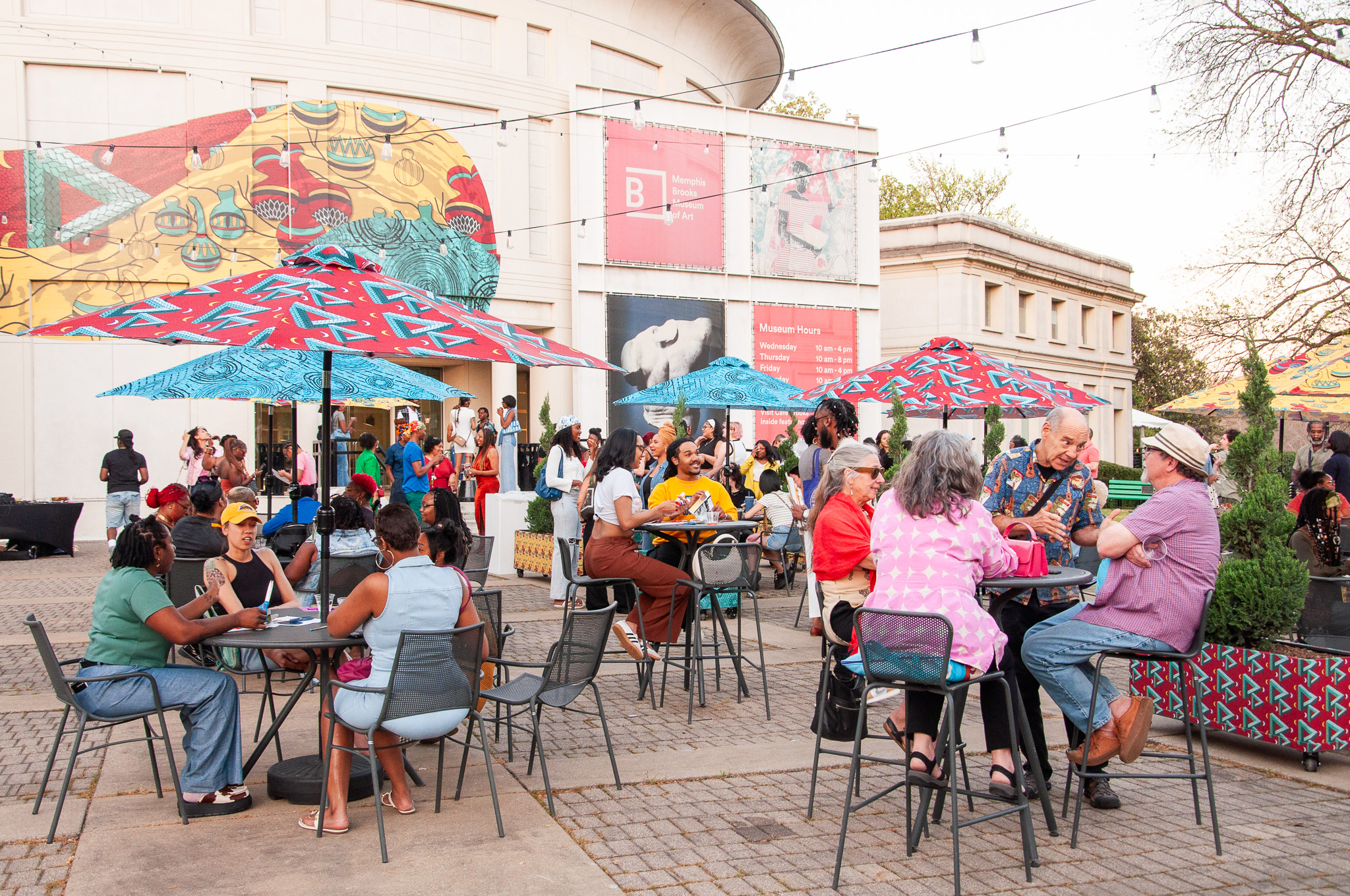
Samilia Pelshak presents Wax Print Wonderland, an enchanting installation of her vibrant African wax print designs. Trained in graphic design at the Memphis College of Art, Pelshak transforms the plaza into a surrealist wonderland inspired by her Nigerian cultural heritage and childhood memories of the 1951 Disney film Alice in Wonderland. Pelshak’s patterns contain cultural signifiers of the African diaspora, including gourds that form faces symbolizing watchful eyes and wisdom, concentric circles pulled from woven placemats that exemplify community gathering, and braids shaped into triangles, referencing unity and hairbraiding traditions. Wax print is a highly recognizable and celebrated fabric known for its bold colors and dazzling patterns rooted in West Africa. From the motifs in her wax print patterns, to the whimsical shape of the topiaries and swirl of textiles emerging from the museum’s entrance, the installation celebrates collective identity and strength in gathering.
Made possible with support from:


Generously sponsored by

Exhibition Programs
Artist
Curator
Artist

Samilia Pelshak
Samilia Pelshak is a Nigerian-American fashion designer, educator, and pattern designer whose multidisciplinary practice bridges fashion, environmental design, and visual storytelling. She is based in Memphis, Tennessee, where she is the CEO of her sustainable fashion brand, SAMILIA, LLC. Pelshak received her Bachelor of Fine Arts degree from the Memphis College of Art, with further studies in environmental and graphic design at the Rhode Island School of Design.
Samilia Pelshak
Samilia Pelshak is a Nigerian-American fashion designer, educator, and pattern designer whose multidisciplinary practice bridges fashion, environmental design, and visual storytelling. She is based in Memphis, Tennessee, where she is the CEO of her sustainable fashion brand, SAMILIA, LLC. Pelshak received her Bachelor of Fine Arts degree from the Memphis College of Art, with further studies in environmental and graphic design at the Rhode Island School of Design.
Kristin Pedrozo
Kristin Pedrozo is a double fellow, holding the position of Art Bridges Curatorial Fellow while being an ASU-LACMA fellow at the Memphis Brooks Museum of Art. Born in the Philippines, and raised in Memphis, Tennessee, Kristin received her BFA in studio art at Rhodes College and is now a graduate student studying art history through the ASU-LACMA fellowship, which is a work-while-you study program collaboratively held by Arizona State University and the Los Angeles County Museum of Art to culturally diversify the staff and leadership of art museums across the states.

Art Bridges Curatorial Fellow
Kristin Pedrozo
Kristin Pedrozo is a double fellow, holding the position of Art Bridges Curatorial Fellow while being an ASU-LACMA fellow at the Memphis Brooks Museum of Art. Born in the Philippines, and raised in Memphis, Tennessee, Kristin received her BFA in studio art at Rhodes College and is now a graduate student studying art history through the ASU-LACMA fellowship, which is a work-while-you study program collaboratively held by Arizona State University and the Los Angeles County Museum of Art to culturally diversify the staff and leadership of art museums across the states.
Program Recordings
Resources
The 901 Black American Portraits Soundtrack
Listen to a soundtrack of Memphis music that exemplifies Black Love, Power, and Joy. The 901 Black American Portraits Soundtrack celebrates the vibrant legacy and future of Black musicians in the city of Memphis. This playlist was curated by Jared “Jay B” Boyd, a Memphis-based multimedia artist, journalist, DJ, and on-air personality.
MCA Exhibition Questionnaire
Help us generate the fullest picture possible of the MCA experience.
Submitting a questionnaire, which includes a request for an image of an artwork, is essential to be considered for part of the exhibition.
Why Have There Been No Great Women Artists?
The American art theorist Linda Nochlin (1931-2017) posed this question as the title of a pioneering article in 1971. This essay was considered one of the first major works of Feminist art history, it has become a set text for those who study art internationally, and it is influential in many other fields.